Masterclass
Train for Peak Performance
We train our bodies at the gym and our minds for exams, yet almost nobody trains the skills that decide how we perform under pressure: staying calm, holding focus and bouncing back.
The need is real: the World Health Organization estimates that 1 in 7 adolescents lives with a mental disorder, and that depression and anxiety cost the world about 12 billion working days a year.
Peak performance exercises are simple, repeatable practices that build these missing skills, the way push-ups build strength.
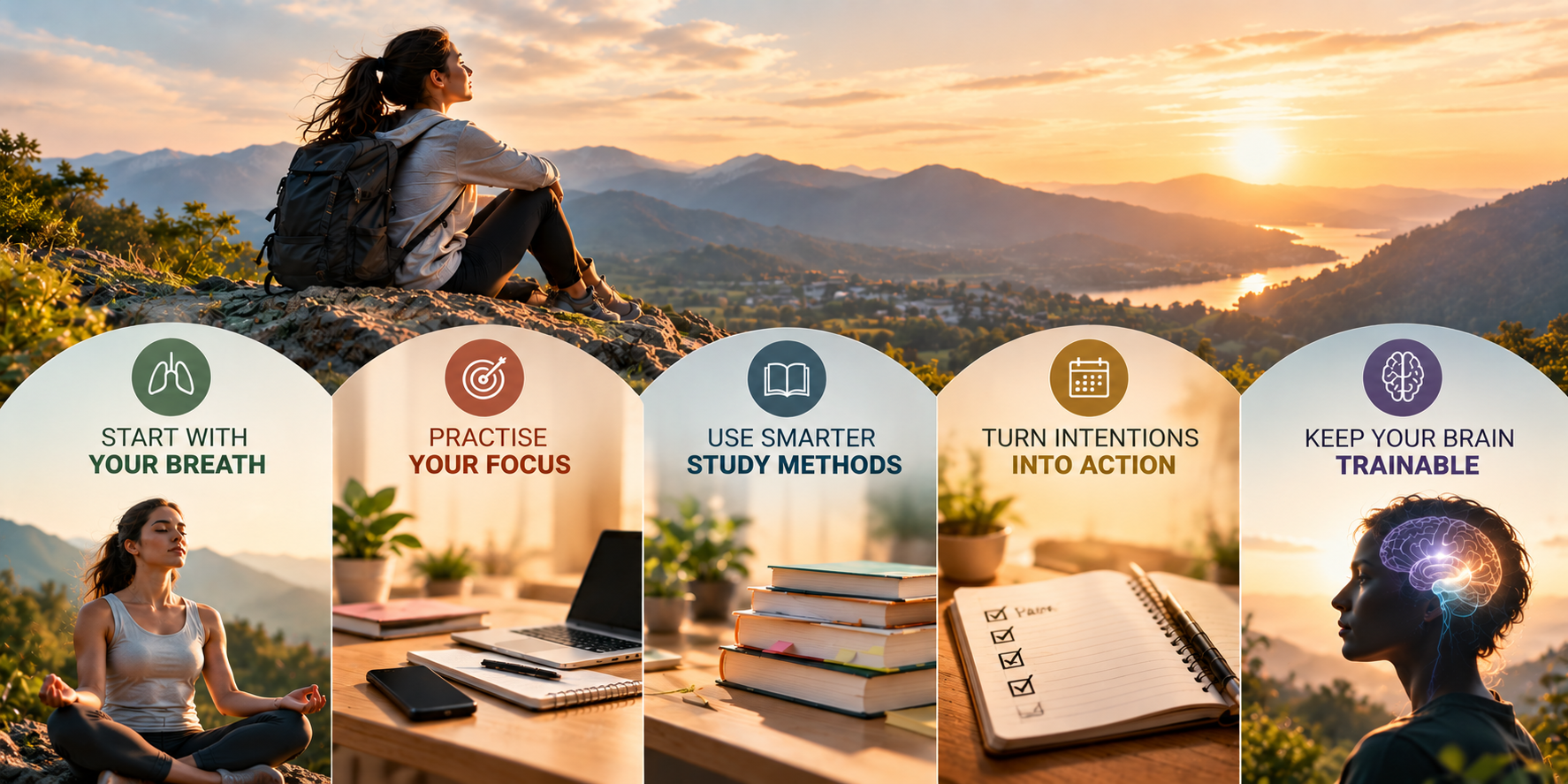
Controlled Breathing
Controlled breathing is the easiest place to start, and a 2023 meta-analysis of randomised trials found that people who practised breathwork reported lower stress than those who didn't (Fincham et al., Scientific Reports).
Training Your Focus
Focus can be practised too: short blocks of single-task work, with the phone in another room, give your attention the training that constant notifications take away.
How you practise matters as much as how long, and a major review of study methods rated self-testing and spaced practice far above rereading and highlighting (Dunlosky et al., 2013).
Turn Intentions Into Action
Turning vague intentions into "when-then" plans, such as "When I finish dinner, I'll revise for 30 minutes," helped people reach their goals clearly more often across 94 studies (Gollwitzer & Sheeran, 2006).
The Brain Stays Trainable
The brain stays trainable at every age: in one trial, a year of moderate aerobic exercise grew older adults' hippocampus, the brain's memory centre, by about 2% (Erickson et al., PNAS, 2011).
None of this replaces professional help when it's needed, but these practices are free, need no equipment and fit into the busiest day.
Train for Pressure
Pressure in modern life isn't going away, so the smartest move is to train for it the way athletes do: a little, every day.